Tree planting at Jayanagar cooperative society
June 10th

Tree planting near Amruth Sparkling nest, Goshala, Whitefield
Tree planting near Amruth Sparkling nest, Goshala, Whitefield
Tree planting at Jaibharath nagar on 12th July 15
Tree planting at Jaibharathnagar on 12th July 15
Resident welfare association joined their hands to plant the trees in their area on the road side to increase the greenery.
The saplings were protected by metal fence provided by BBMP and watering event was done. Most of the senior citizen volunteers came with huge enthusiasm to plant saplings.

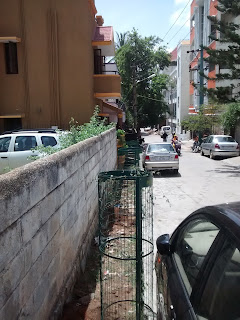

Resident welfare association joined their hands to plant the trees in their area on the road side to increase the greenery.
The saplings were protected by metal fence provided by BBMP and watering event was done. Most of the senior citizen volunteers came with huge enthusiasm to plant saplings.


Horamavu clean up drive on June 13th 15
Horamavu clean up drive on June 13th 15
Horamavu residents collectively came to preserve the Hoamavu lake with a clean up drive.
Early morning started with trash bag challenge to collect the trash around the lake. Kids enjoyed to paint on the cement garbage pipes with a message. A huge turn around was seen by local residents for the event and foreseeing saving the lake.


Horamavu residents collectively came to preserve the Hoamavu lake with a clean up drive.
Early morning started with trash bag challenge to collect the trash around the lake. Kids enjoyed to paint on the cement garbage pipes with a message. A huge turn around was seen by local residents for the event and foreseeing saving the lake.


Tree planting at Vakils on June 6th 15
Tree planting at Vakils on June 6th 15
Residents of Vakils went for the 2nd stage tree planting with 80 saplings in their layout. A neatly dug pits were filled with saplings with huge participation by children. Fences were added as necessary to protect the saplings.


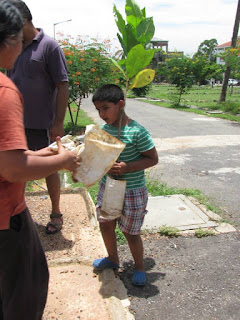

Residents of Vakils went for the 2nd stage tree planting with 80 saplings in their layout. A neatly dug pits were filled with saplings with huge participation by children. Fences were added as necessary to protect the saplings.


Clean up drive at Kalkere kalyani by Colt on March 21, 15
Kalkere kalyani clean up drive
The event was driven by Colt, Manyath Tech park employees.
The Kalkere kalayani is getting too bad shape due to garbage disposal and growing weeds. This was cleaned by team of 25 people.


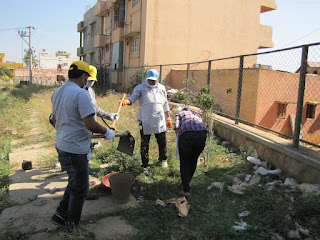


The event was driven by Colt, Manyath Tech park employees.
The Kalkere kalayani is getting too bad shape due to garbage disposal and growing weeds. This was cleaned by team of 25 people.


Tree planting at Kadugodi Road Sep 7 2014
Tree planting at Kadugodi Road Sep 7 2014
The event was driven by LIFE, Asstez Marq and Bhruhat Whitefield Residential Community association/BWRCA on September on 6th and 13th, 2014.
The planting event was done on road median connecting Hosakote-Kadugodi consisting 350 saplings. The saplings were selected to be more of narrow and taller trees suitable for medians.
A huge turn out by residents by closely knitted communities were part of the event amounting more than 250 people.
Local panchayat supported for the event and each residential dwelling taken care for watering event to be maintained till the sapling will sustain on its own.


The event was driven by LIFE, Asstez Marq and Bhruhat Whitefield Residential Community association/BWRCA on September on 6th and 13th, 2014.
The planting event was done on road median connecting Hosakote-Kadugodi consisting 350 saplings. The saplings were selected to be more of narrow and taller trees suitable for medians.
A huge turn out by residents by closely knitted communities were part of the event amounting more than 250 people.
Local panchayat supported for the event and each residential dwelling taken care for watering event to be maintained till the sapling will sustain on its own.


Subscribe to:
Posts (Atom)


 Posts
Posts

